Interior Visualization
Rooms that don't exist yet, styled and lit like they've been lived in for years.
A white-background render proves a product exists; a lifestyle scene sells the life around it. Most 3D interior rendering services are sold to architects and developers who need to presell a space. We mostly do the other job: room scenes for brands whose product lives inside the room. Wallpaper across fifteen rooms, a kitchen in two finishes, a furniture line placed in more than a hundred interiors. Living rooms, bedrooms, kitchens and commercial spaces, in the styles your buyer actually responds to — modern, minimalist, Japandi, vintage — with three revision rounds included on every scene.
Last updated
- →Room scenes built for a catalog, not just for one hero image
- →The same room in every finish — no reshoot, ever
- →Three revision rounds included on every scene
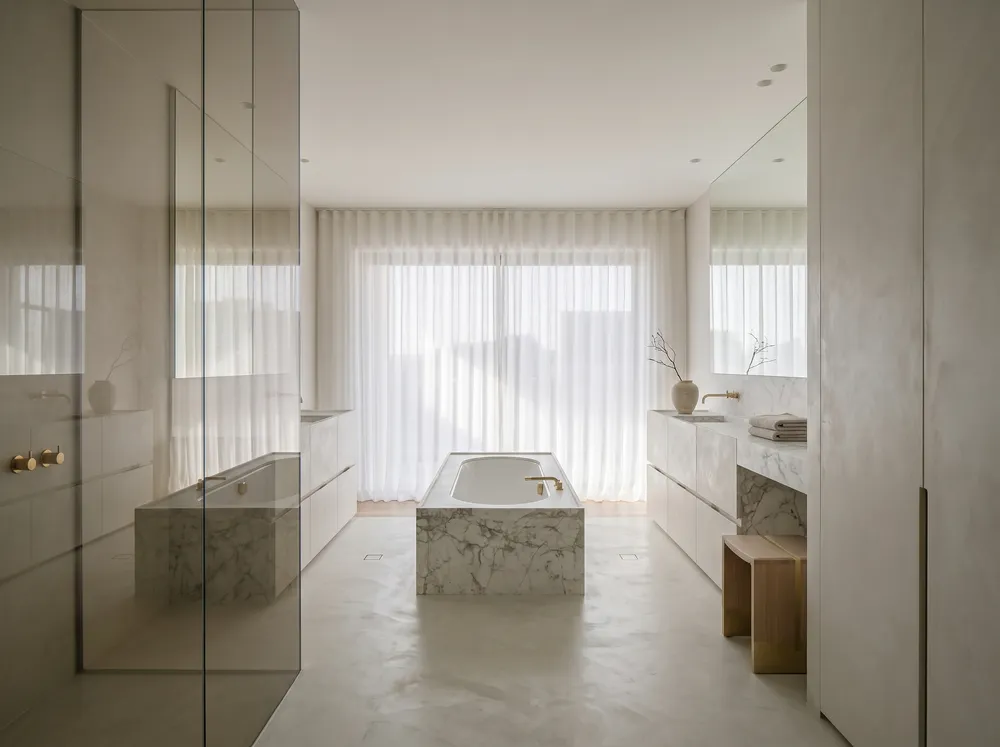
Align Interiors, CanadaView project→
01What do you actually get from an interior visualization?
Styled room scenes, plus a set you can re-light and re-dress
+
What do you actually get from an interior visualization?
Styled room scenes, plus a set you can re-light and re-dress
An interior visualization is a photorealistic room built and lit digitally: furniture, finishes, textiles, light through the windows, and the small styling that stops a space reading as a showroom. Interior design 3D rendering and 3D interior visualization are the same craft under different names. You get final images sized for a full-bleed hero, not just a thumbnail.
What you also get is the scene itself. Once a room exists as a 3D set, the next version of it — a different finish, a different camera height, a different time of day — comes out of that set instead of out of a new shoot. That is the whole economic argument, and it is the reason a catalog-scale programme is possible at all.
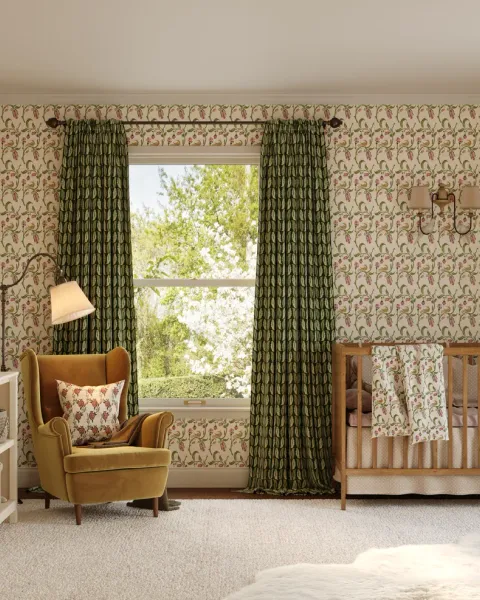
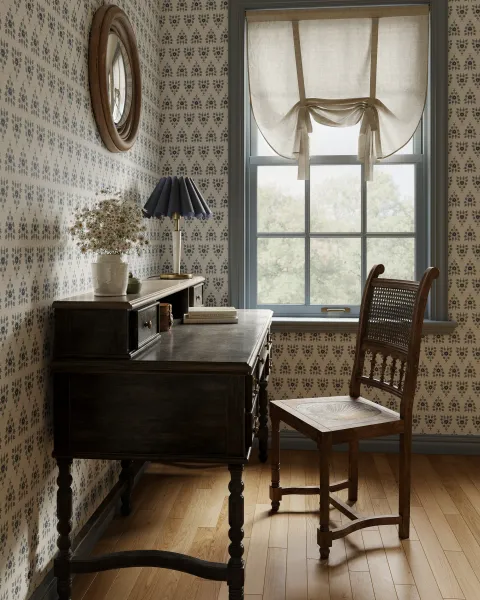
For Huggleberry Hill, a US wallpaper brand, that meant 15 rooms in different styles, each dressed with period-appropriate furniture so the pattern read as part of a lived-in home rather than a swatch on a wall.
02How long does a set of interior scenes take?
15 rooms in four weeks; a full residence in three to four
+
How long does a set of interior scenes take?
15 rooms in four weeks; a full residence in three to four
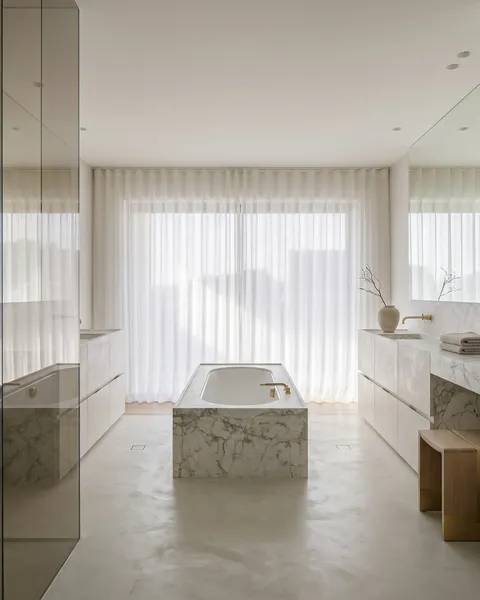
The honest answer depends on how much of the room already exists as geometry, but our own projects sit in a narrow band. Huggleberry Hill's 15-room wallpaper catalog took four weeks. Align Interiors' full residence — living room, bathroom, bedroom, kitchen-dining and lounge, about 25 renders in total — took three to four weeks to design approval.
At sustained volume the rate is higher. Through the working relationship with Holzconnection, the German made-to-measure furniture manufacturer, we ran between five and ten rooms a month over several years.
Three revision rounds are included on every scene. In practice that is what the schedule is built around: the first draft lands, the styling and light get argued over once or twice, and the third round is usually a formality.
- 15 rooms
- Huggleberry Hill
- wallpaper catalog delivered in four weeks
- ~25 renders
- Align Interiors
- five rooms of one residence, three to four weeks
- 5-10 / month
- Holzconnection
- sustained rate over a multi-year programme
03Can the same room be shown in more than one finish?
Two colourways on one Brooklyn kitchen; 15+ combinations on one table line
+
Can the same room be shown in more than one finish?
Two colourways on one Brooklyn kitchen; 15+ combinations on one table line
Yes, and this is where rendering stops competing with photography and starts doing something photography cannot do at any price. A physical shoot prices each finish separately: new samples, new delivery, new studio day. A 3D scene prices the room once and the finishes after it.
Urban Homecraft, the Brooklyn custom-cabinet maker, took two colour variants of the same kitchen and bathroom scenes over a five-week project. On Holzconnection's dining line we rendered more than fifteen combinations of tabletop and leg.
The limit is not technical. It is whether the room is worth building in the first place. One scene shown in one finish rarely is, and we will say so.
04What does an interior scene cost against a photo shoot?
One client puts her saving at $10,000 or more
+
What does an interior scene cost against a photo shoot?
One client puts her saving at $10,000 or more
We quote per project rather than per image, because the number of rooms and how much geometry already exists move the price far more than the image count does. What we can give you is what clients have said about the comparison.
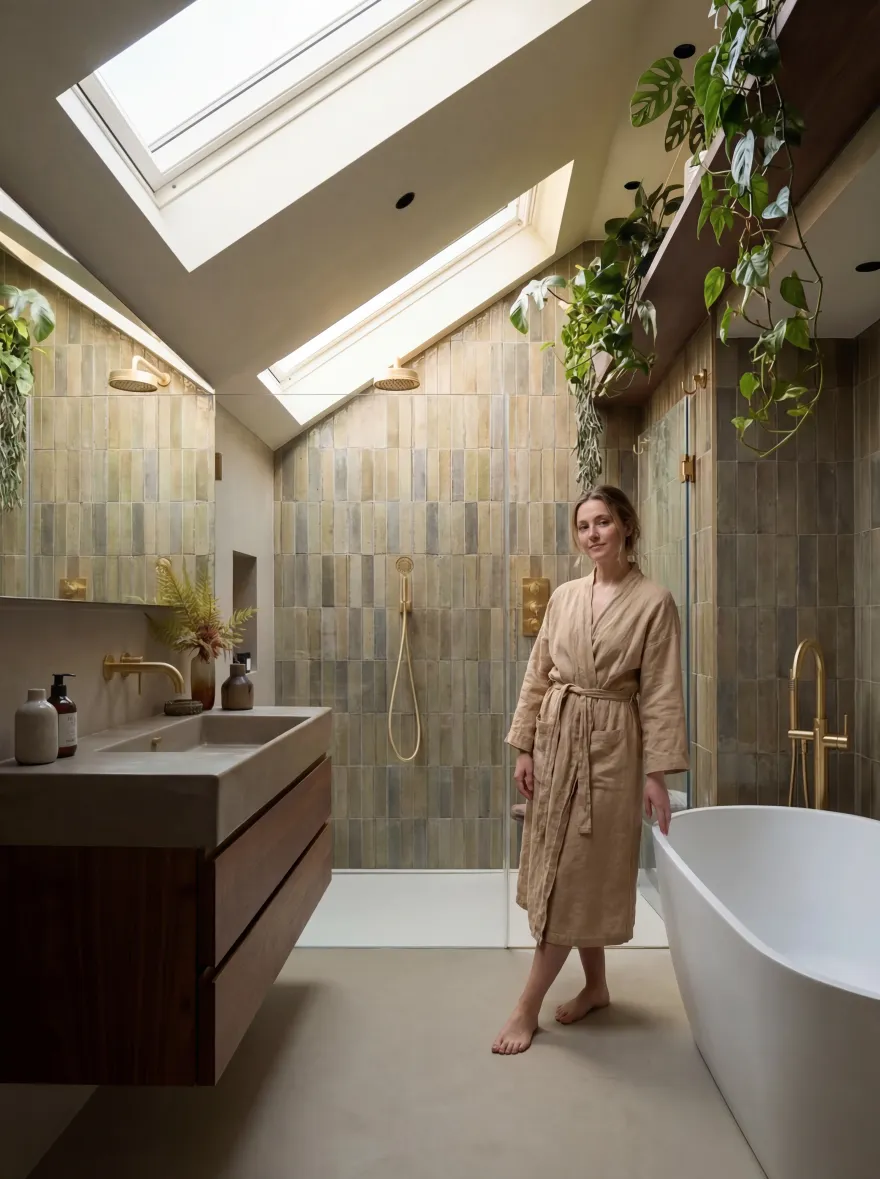
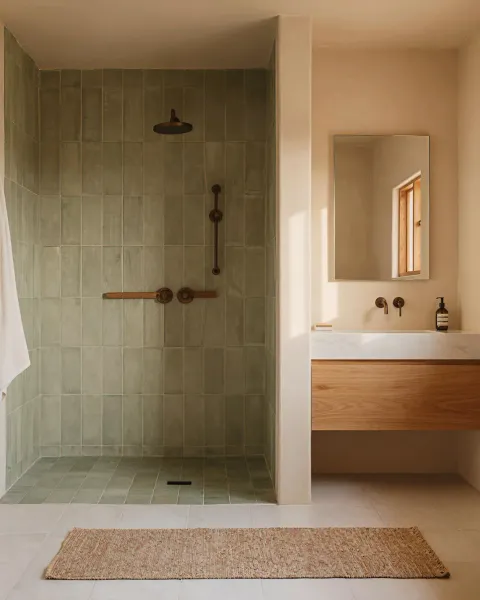
Hannah at Huggleberry Hill put her saving against a traditional shoot at at least $10,000 — her figure, from her own email, not a number we calculated. On a single Urban Homecraft kitchen scene the saving against shooting it was around $3,000.
Those numbers are not the interesting part on their own. The interesting part is that neither client had to build the room. A wallpaper brand cannot photograph fifteen period interiors it does not own; a cabinet maker cannot install two versions of the same kitchen to shoot both.
“Neither client had to build the room they were selling from.”
05Can you match our existing photography and brand style?
Send the catalog you already have and we light to it
+
Can you match our existing photography and brand style?
Send the catalog you already have and we light to it
Send examples of your current photography or previous renders and we match the lighting, camera height, and overall mood. On a catalog this matters more than it sounds: a scene that is beautiful but two stops brighter than the rest of your images is a scene you cannot use next to them.
Style is a brief, not a preset. Modern, minimalist, Japandi, vintage, heritage — the question we ask first is who the buyer is, because a room that flatters the product to us is not always the room that sells it to them.
The matching runs the other way too. Once a set exists as a 3D scene, later images join the same catalog without drifting: the light is where it was, the camera is at the height it was, and season three still sits next to season one.
06What if we sell the interior itself, not a product?
Design studios use the same scenes to get sign-off
+
What if we sell the interior itself, not a product?
Design studios use the same scenes to get sign-off
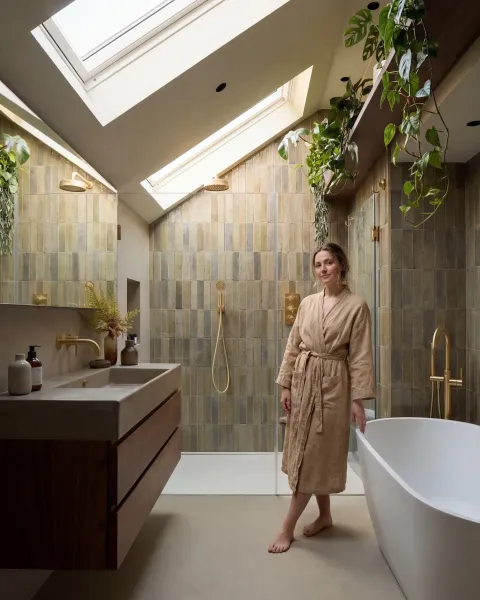
Then the scene does a different job: it gets the client to say yes before anything is bought or built. Align Interiors, a Toronto design studio, uses our renders to walk their own clients through a scheme: five rooms of one residence, populated with people so the space reads as inhabited rather than as an empty stage set, and every camera angle prepared so the same scene can become a short walkthrough later.
The deliverable is the same; the deadline is not. Product work is paced by a catalog launch, design work by a client meeting, and it is worth telling us which one you are on.
07When is a photo shoot still the better buy?
One room, one finish, and a space that already exists
+
When is a photo shoot still the better buy?
One room, one finish, and a space that already exists
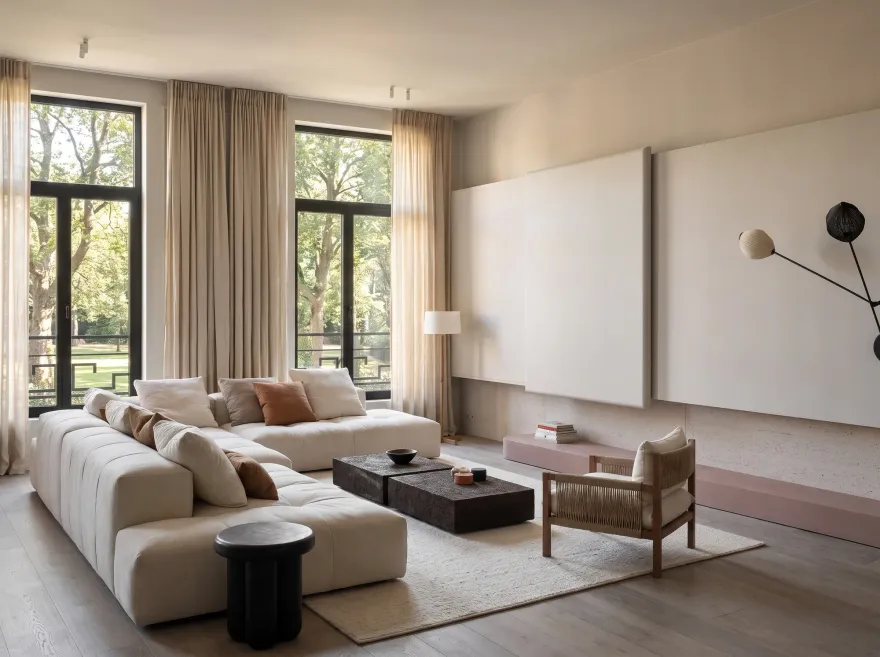
When the space is real, already furnished, and you need one set of images of it. A photographer with a half-day and a wide lens will beat us on both price and calendar, and nothing about a 3D scene pays for itself in that situation.
Building an accurate room is an upfront cost that pays back through reuse. If there is nothing to reuse — no second finish, no second room, no next season — photograph it. The break-even is roughly the point where a second version of the room appears: below that, shoot it; above it, the model starts earning.
Photography also holds its ground on surfaces that are really about texture in the hand. A hand-finished piece, an antique with visible wear, a stone with a grain that is the whole point of the material — modelling those to a standard that beats a good photograph costs more than the photograph did.
And if you have a showroom, you already own a set. A space you can walk into and shoot again next season is a different economic proposition from a room that has to be built before anyone can photograph it, and we would rather point that out than quote against it.
What tips it the other way is rarely a single image. It is the second colourway, the fifty-product catalog that would need fifty deliveries, or a launch date that lands before the furniture does.
Example projects
View all projects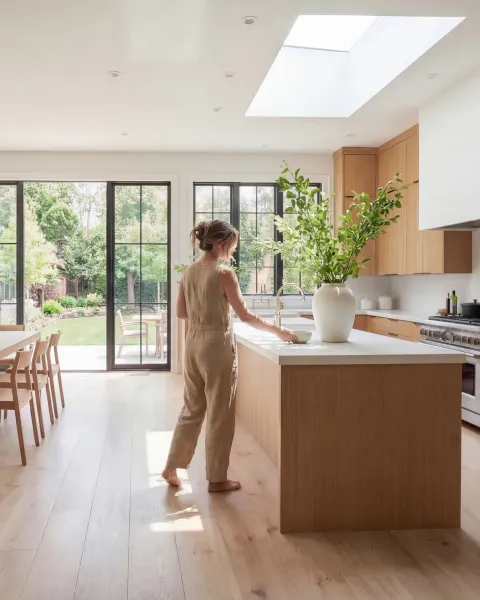
Germany
NordCraft Kitchens — Launch Visuals
+27% pre-orders
USA
Huggleberry Hill — Vintage-Style Wallpaper Rooms
Saved at least $10,000 versus a photo shoot
USA
Huggleberry Hill — Floral Print Collection
Dressed like a real room, not a swatch
Belgium
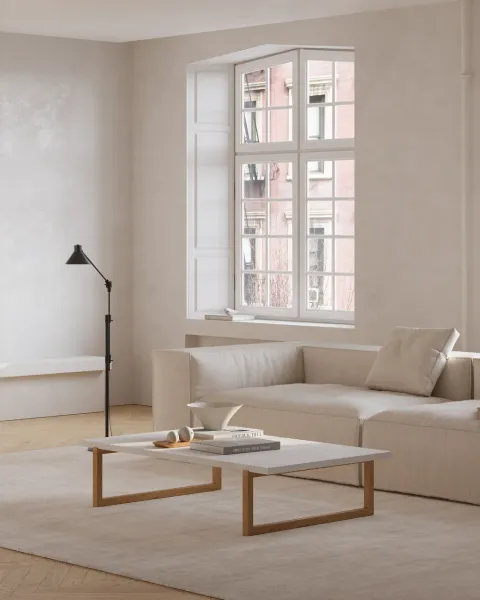
White Interior
Styled without a physical space
USA
Urban Homecraft — Bathroom Scene I
Saved ~$3,000 on this project
USA
Urban Homecraft — Bathroom Scene III
No studio time booked
Behind this service

Our veritable guru of warm and cozy interiors — she knows how to highlight the most important detail in the most appropriate way.
Tanya Plutanova, 3D Artist
What affects your quote
- →Number of scenes or camera angles you need
- →Complexity of the model and materials
- →How many revision rounds you use
- →Standard timeline versus a rush turnaround
We assess each project on its own merits rather than a flat rate — as a rule, the more images you order in one project, the lower the cost per image. Send us a brief description and we'll respond with an estimated cost.
Common questions
Still deciding? Send your product list with whatever reference you have and we will come back with a scope, a timeline and an estimated cost before anything is committed.
Get an estimate→How many revisions are included?+
Three revision rounds are included on every interior scene, so the mood and styling land right before it goes out the door.
How long does an interior rendering project take?+
A 15-room wallpaper catalog took four weeks; a five-room residence with around 25 renders took three to four weeks to design approval. At sustained volume we have delivered five to ten rooms a month.
Can you show the same room in different colours or finishes?+
Yes — the room is built once and the finishes come after it. One client took two colour variants of the same kitchen and bathroom scenes; on another we rendered more than fifteen combinations of tabletop and leg.
What design styles can you match?+
We work across the styles your audience actually responds to — modern, minimalist, Japandi, vintage, and more — matched to your target buyer, not a generic look.
Can you match our existing photography style?+
Yes — send us examples of your current photography or previous renders and we'll match the lighting, camera angles, and overall mood for a consistent brand look.
When would you tell us not to bother with 3D?+
When the space is real, already furnished, and you need one set of images of it in one finish. A photographer will beat us on price and calendar there. Rendering pays back through reuse: a second finish, a second room, a next season.
Do you work with interior designers as well as brands?+
Both, though the brief differs. Interior design rendering services for a studio usually mean presenting one client's scheme back to them before it is built. Brand work means a room built to sell whatever sits inside it. Most of our volume is the second, and 3D rendering services for interior design practices tend to be smaller, faster jobs by comparison.
What should I look for when comparing interior rendering companies?+
A studio's own catalogue of finished rooms, not a showreel of concept scenes nobody bought. Ask what a real client used the images for — a launch, an ad campaign, a catalogue — and how many revision rounds are included before that becomes an extra line item. Most interior rendering services quote per image; we quote per project, because the number of rooms and how much geometry already exists move the price far more than the image count does.