Animation & AI Animation
Furniture isn't static — your marketing shouldn't be either.
A still image proves a product looks good; a 360° spin or a walkthrough proves it holds up from every angle. We produce both traditional frame-by-frame 3D animation, when you need full creative control over every motion, and AI-generated animation, when speed and cost matter more than a hand-tuned camera move — spins, interior walkthroughs, and feature/assembly animations built for the platforms where engagement actually beats a static post.
Last updated
- →Stop losing engagement to static posts — show every angle in motion
- →Need it fast and cheap? AI animation gets you there without the wait
- →Built for the platforms where motion beats a still image
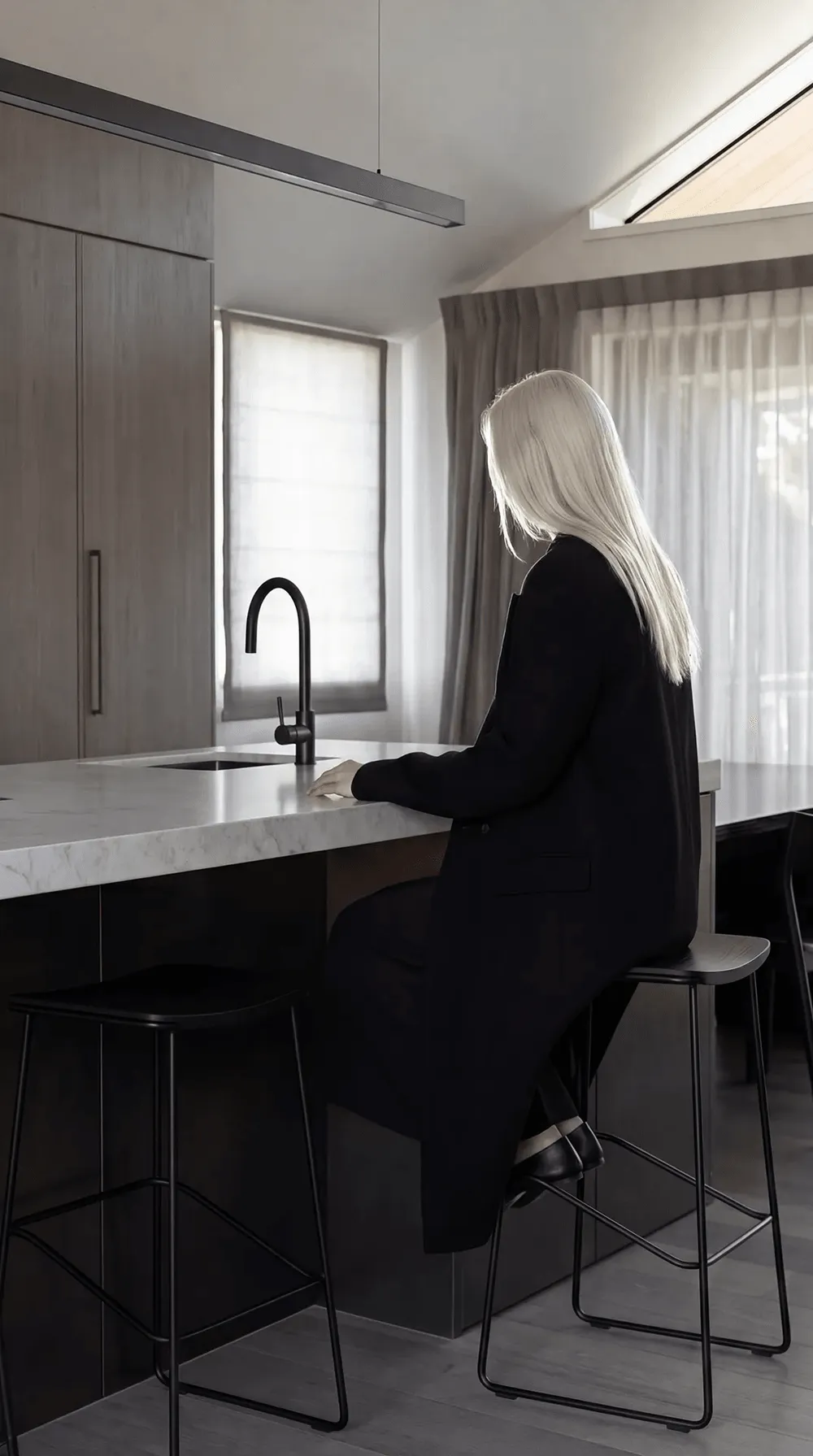
UrbanRest Seating, UKView project→
01What kinds of animation do you actually produce?
Turntables, interior walkthroughs, and motion built for a feed
+
What kinds of animation do you actually produce?
Turntables, interior walkthroughs, and motion built for a feed
Our 3D animation services cover three formats, and they solve different problems. A turntable rotates a single product a full 360° on white, which is what a product page needs. Walkthrough animation moves a camera through a space, which is what a room needs. And lifestyle motion takes a styled scene and gives it enough movement to survive a social feed.
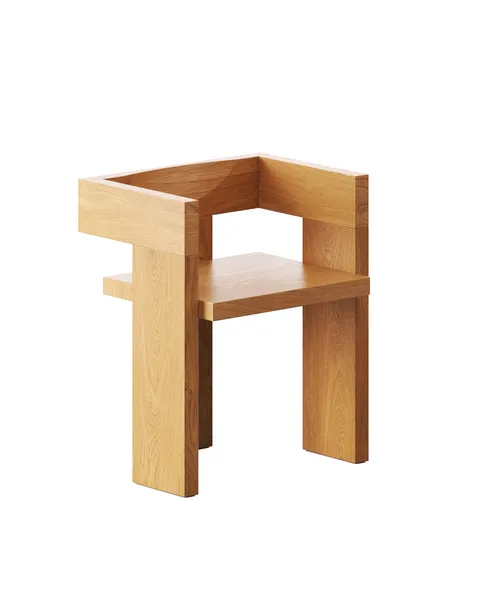
The turntables are the highest-volume of the three. Forty products went out that way in our three most recent modeling batches — chairs, tables and lighting — each one rotating on white, ready to drop onto a product page.
All three come out of the same 3D model. That matters for cost: if we have already modelled your product for stills, the animation is not a new production, it is a camera decision. It is also why we quote 3D rendering and animation services together more often than separately: the expensive half is already paid for.
02Traditional 3D animation or AI animation — which do you need?
Control versus speed, and the choice is usually obvious once stated
+
Traditional 3D animation or AI animation — which do you need?
Control versus speed, and the choice is usually obvious once stated
Traditional frame-by-frame 3D animation gives full control over every motion. The camera goes exactly where you put it, the product moves exactly as it really moves, and a mechanism that opens, folds or extends can be shown doing that accurately. Assembly sequences and anything demonstrating how a product works belong here.
AI-generated animation trades that control for speed and cost. It is the right call when the motion is atmosphere rather than demonstration: a scene that breathes, a camera that drifts, something that stops a thumb in a feed without needing to explain a mechanism.
UrbanRest Seating went the AI route for exactly that reason: the job was to hold attention in a paid social placement, not to demonstrate how a chair assembles.
03Does motion actually outperform a still image?
UrbanRest's click-through rate came in 2.3× higher
+
Does motion actually outperform a still image?
UrbanRest's click-through rate came in 2.3× higher
On the one campaign where we have the figure, yes, and by a clear margin. UrbanRest Seating were running paid social on still product photography and losing the competition for attention in a feed built for movement. We paired lifestyle renders of the seating range with AI-generated animation, and click-through rate came in 2.3× higher than the previous campaign.
Same product, same audience, different format. That is as close to a controlled comparison as advertising usually gets.
Worth stating the limit of that number honestly: it is one client, one campaign, one product category. It is a documented result rather than a rate anyone should expect, but it is also the reason we stopped treating animation as an upsell on top of stills.
“One campaign is not a law of physics. But it was the same product and the same audience, and the only thing we changed was that the picture moved.”
- 2.3×
- UrbanRest Seating
- ad click-through vs. the previous campaign
- 40
- Products turntabled
- across the three most recent batches
- 15+
- Urban Homecraft projects
- stills and motion from the same scenes
04Where does the animation come from?
The same 3D model that produced your stills
+
Where does the animation come from?
The same 3D model that produced your stills
From the model, not from a separate production. A 3D scene already contains everything a camera needs — geometry, materials, lighting — so animating it is a matter of deciding what moves and how far.
This is why the order matters commercially. Commissioning stills and animation together costs less than commissioning them a year apart, because the second job reuses a model that has already been paid for.
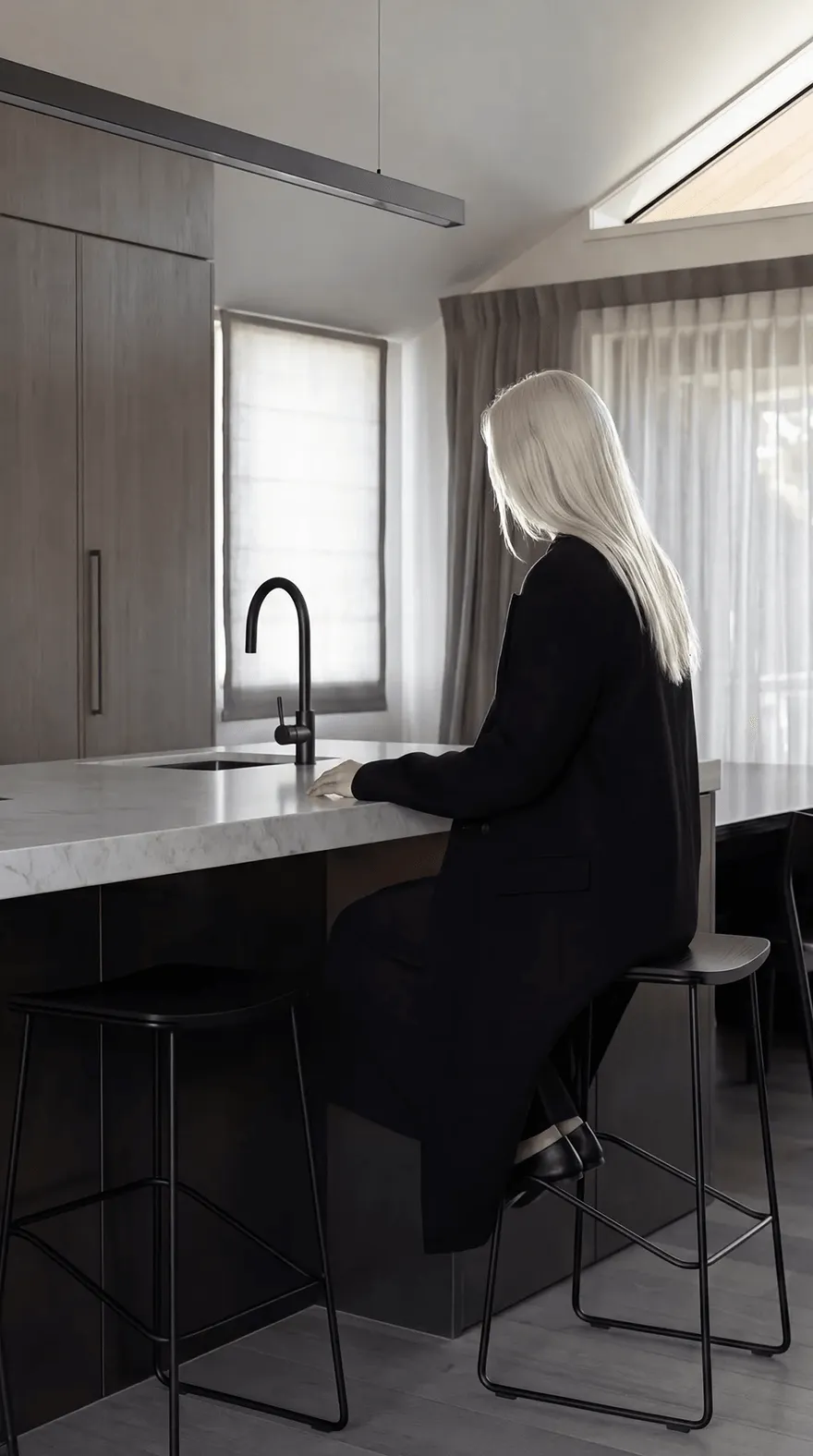
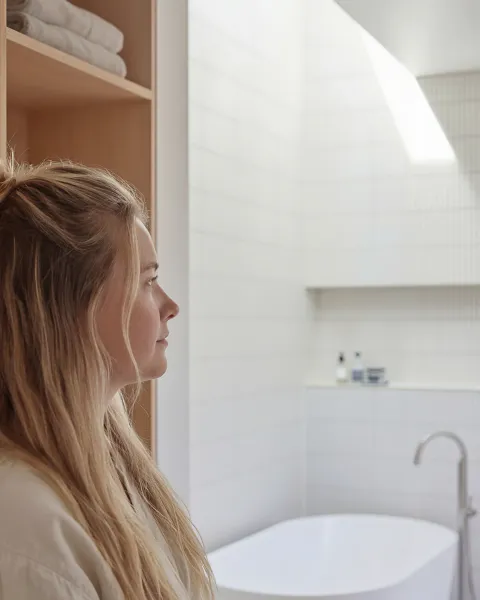
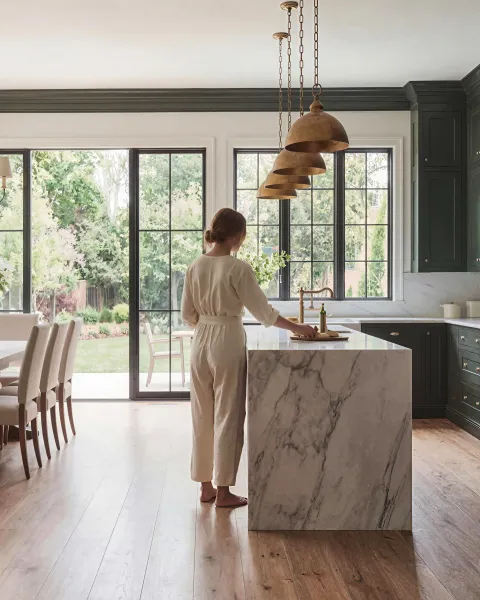
Urban Homecraft's bathroom and kitchen scenes work this way: the same styled scene supplies catalogue images and motion content, rather than the studio building one asset for stills and another for social.
05What do we need from you to start?
A model or the reference to build one, plus the format it has to fit
+
What do we need from you to start?
A model or the reference to build one, plus the format it has to fit
If we have already modelled the product, nothing: we work from what exists. If not, the same reference any modelling job needs: CAD or 3D files, drawings, or photographs with dimensions.
Beyond that, tell us where the animation is going to run. A 9:16 clip for a paid social placement, a looping turntable on a product page and a 16:9 sequence for a presentation are three different edits, and knowing the destination first avoids re-cutting later.
Duration and whether it needs to loop are the other two answers worth having early. A loop has to be built as a loop; it cannot be trimmed into one afterwards.
06When is a still image enough?
Catalogue, marketplace and white-background listings do not need motion
+
When is a still image enough?
Catalogue, marketplace and white-background listings do not need motion
Most catalogue work does not need animation. A marketplace listing, a white-background product shot, a spec sheet — these are read, not watched, and motion adds cost without adding information.
Animation earns its place where something has to compete for attention or explain itself: a paid feed placement, a product whose mechanism is the selling point, or a space a viewer needs to understand the shape of. Outside those, a good still does the job.
Example projects
View all projects
UK
UrbanRest Seating — Ad Campaign
2.3× ad CTR increase
USA
Urban Homecraft — Bathroom Scene II
Ready across every channel
.DGa_Nby0_GTA6F.webp)
USA
Urban Homecraft — Bathroom Scene IV
Added without a reshoot

USA
Urban Homecraft — Kitchen Scene I
No physical kitchen needed
USA
Urban Homecraft — Kitchen Scene II
No new shoot booked
Norway
Norwegian architecture studio — Warm Wood, Cold Forest
Exterior, interior, people and motion in one set
Behind this service

Paul keeps projects moving between clients and artists, and he does it with a designer's eye rather than a checklist — he will look at a scene from several angles before agreeing it is finished.
Paul Guk, Project Manager
What affects your quote
- →Number of scenes or camera angles you need
- →Complexity of the model and materials
- →How many revision rounds you use
- →Standard timeline versus a rush turnaround
We assess each project on its own merits rather than a flat rate — as a rule, the more images you order in one project, the lower the cost per image. Send us a brief description and we'll respond with an estimated cost.
Common questions
Still deciding? Send your product list with whatever reference you have and we will come back with a scope, a timeline and an estimated cost before anything is committed.
Get an estimate→Traditional or AI animation — which do I need?+
Traditional frame-by-frame 3D animation when you need full control: an assembly sequence, a mechanism opening, anything demonstrating how a product actually works. AI-generated animation when the motion is atmosphere rather than demonstration and speed matters more than a hand-tuned camera move. UrbanRest Seating used AI animation for paid social, where the job was holding attention rather than explaining a mechanism.
Does animation actually perform better than a still?+
On the one campaign where we have a documented figure, yes: UrbanRest Seating's click-through rate came in 2.3× higher than their previous campaign, with the same product and the same audience. That is one client in one category, so treat it as a documented result rather than a number to expect.
Can you animate a product you have already rendered for us?+
Yes, and it is considerably cheaper than starting fresh. The animation comes out of the existing 3D model, so there is no modelling stage to pay for a second time, only the camera work and the render.
What formats do you deliver?+
Whatever the destination needs — 9:16 for paid social placements, looping turntables for product pages, 16:9 for presentations and websites. Tell us where it runs before we start, because a loop has to be built as a loop rather than trimmed into one afterwards.
Do you animate buildings and interiors as well as products?+
Yes. 3D product animation services and 3D architectural animation services run on the same pipeline: the difference is what the camera is moving around. For a building it is usually a walkthrough or a slow exterior orbit; for a product it is a turntable or a detail pass. Both come out of a model that already exists if we rendered the stills.
Do you sign an NDA?+
Yes — we sign NDAs for every project and treat client files and unreleased products as fully confidential.