How Furniture Catalog Rendering Works, Step by Step
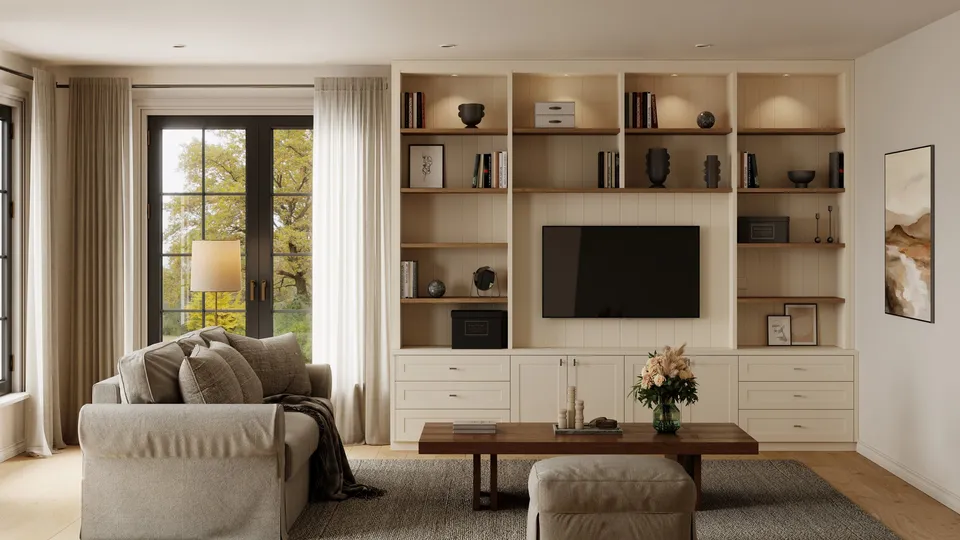
Furniture catalog rendering turns a product that doesn’t exist yet — or exists only as a prototype — into photorealistic images ready for a catalog, an online store, or an ad campaign. It replaces a photo shoot with a five-stage 3D production process: brief, modeling, rendering, revisions, and delivery.
1. Brief
The process starts with whatever reference material you have: CAD files, product photos, sketches, or even measurements. CAD files are preferred because they save modeling time, but they’re not required — our team can build an accurate 3D model from any reference material you provide. Most projects start with an optional 15-30 minute kickoff call to confirm scope, styling direction, and delivery format.
2. Modeling
A 3D artist builds an accurate model of the product, matching real proportions, joinery, and material detail. Before any rendering begins, the geometry is approved in grayscale — this catches shape or proportion issues early, when they’re cheap to fix, instead of after lighting and materials are already in place.
3. Rendering
Once the geometry is approved, the model is lit and textured to match your brand’s look — accurate materials, consistent lighting, and the camera angles you need (typically three or more per product for a catalog). Because the render comes from one 3D model, producing 10 color or material variations costs a fraction of what 10 separate photo shoots would.
4. Revisions
Three rounds of revisions are included in the base price, covering geometry, lighting, and detail adjustments. This is also where format requests get handled — square crops for a marketplace listing, wider shots for a hero banner, or a particular background color for brand consistency.
5. Delivery
Final renders are delivered at 5K resolution, in the file formats you need. For a standard project — 10-20 products with white-background renders — the whole process takes 1-2 weeks. A full catalog of around 50 SKUs takes about two months including modeling, rendering, and revisions; rush service is available with additional team allocation for tighter deadlines.
Why this beats a traditional photo shoot
A photo shoot needs a finished physical sample, a studio, and a reshoot for every color or material variation. 3D rendering only needs the 3D model once — after that, changing a fabric color or a wood finish is a rendering change, not a new shoot. That’s what makes it possible to launch marketing 40-60% faster and start selling before physical production is finished.
If you’re weighing 3D rendering against photography for an upcoming catalog, get in touch with your product list and timeline and we’ll walk you through what the process looks like for your specific catalog.
.Ddro4IoZ_2sd7xH.webp)